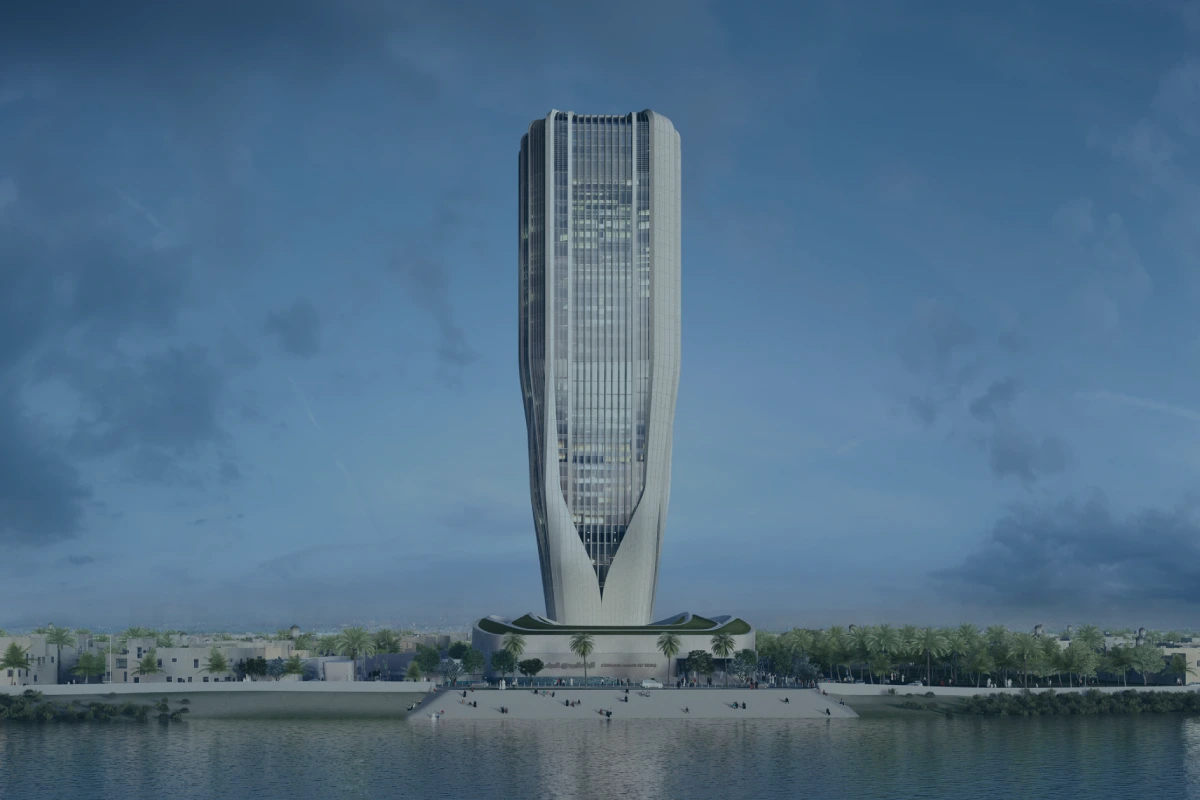
Initiatives: The Central Bank and Housing Finance Support
In recent years, the Central Bank of Iraq (CBI) has recognized the critical importance of supporting the housing sector by providing additional liquidity to banks and specialized government funds.
The Bank has launched several massive financial initiatives that have contributed to enhancing the capabilities of the Housing Fund and the Real Estate Bank to grant housing loans to citizens.
Among the most prominent of these are:
-
The One Trillion Dinar Initiative (2015–2020).
-
The Five Trillion Dinar Initiative (starting from 2021), specifically allocated to the housing sector.
February 2021 Initiative Details
In February 2021, the Central Bank of Iraq announced a new initiative for housing loans, which involved dividing lending outlets into two main categories:
1. Loans via the Housing Fund
These loans were allocated for financing the construction of housing units or adding construction to existing ones by citizens. The specifications are as follows:
-
Loan Ceiling:
-
75 million IQD in Baghdad and provincial centers (provided the construction area is not less than 100 m²).
-
60 million IQD in the districts (outskirts) of Baghdad.
-
50 million IQD in other areas.
-
-
Purchase within Investment Complexes: The initiative also included making a 75 million IQD loan available through the Fund to purchase housing units in investment complexes previously financed by the Fund.
-
Interest and Fees: All these loans under the Central Bank initiative are granted interest-free.
-
Instead of interest, a one-time administrative commission of 5% of the loan value is collected.
-
Repayment Period: Up to 20 years.
-
The extension of the repayment period to 20 years was designed to reduce the monthly installment amount, facilitating repayment for citizens.
2. Loans via the Real Estate Bank
These loans were allocated for financing the purchase of ready-made housing units intended for sale.
A. Purchasing Outside Investment Complexes:
-
Loan Ceiling: 100 million IQD for purchasing a house or apartment outside investment housing complexes.
-
Condition: The area must not be less than 100 m².
-
Interest: These loans feature a declining annual interest rate of 2% of the loan balance.
-
Repayment Period: A maximum of 20 years.
B. Purchasing Inside Investment Complexes:
-
Loan Ceiling: 125 million IQD allocated for purchasing a housing unit inside investment complexes (such as new compounds executed by developers).
-
Interest: This loan is completely interest-free.
-
Fees: Subject to a fixed administrative commission of 5%, collected once.
-
Repayment Period: Up to 20 years.
-
Objective: The loans for purchasing units in complexes were designed to be larger in size and with better terms (interest-free) to encourage citizens to opt for these modern projects.
Initiative for Public Sector Employees
In addition to the above, the Central Bank added a special initiative for state employees whose salaries are domiciled in banks (whether government or private).
-
Loan Amount: Up to 15 million IQD.
-
Repayment Period: 5 years.
-
Fees: A one-time fixed commission of 4%.
-
Purpose: These smaller loans were directed towards consumer purposes and simple housing needs.
Impact and Financial Reinforcement (May 2024 Update)
It can be said that these initiatives have tangibly strengthened the capital of the Housing Fund and the Real Estate Bank to implement housing policy without directly burdening the state budget. Effectively, the Central Bank has injected large sums within these programs.
In May 2024, the Board of Directors of the Central Bank decided to provide an additional 3 trillion IQD to support housing loan applications through the Housing Fund and the Real Estate Bank.
-
The Bank directed both institutions to develop well-studied plans to accommodate the increasing requests fairly, taking into account the completion of delayed applications.
-
The Central Bank called on the Government and the Parliament to allocate annual amounts in the budget to reinforce the capital of the Housing Fund and the Real Estate Bank to ensure they can continue granting loans to citizens.
-
This confirms that supporting the housing sector has become an integrated effort between Monetary Policy (Central Bank) and the Government's Fiscal Policy.
Program Continuity and Commitment
In a related context, the Central Bank has repeatedly announced its continuation in financing all accepted applications within the housing initiatives, denying recurring rumors regarding the program's suspension.
For example, in March 2023, the Central Bank confirmed it would finance all applications for purchasing housing units submitted to participating banks and the Housing Fund according to the established controls, ensuring the program's credibility and maximizing citizen benefit.
The Role of the Real Estate Bank (2025 Updates)
The role of the government-owned Real Estate Bank is complementary to that of the Housing Fund within this system. The Real Estate Bank (established as a government body specialized in housing finance) currently focuses on financing the purchase of ready-made housing units, particularly by utilizing funds from the Central Bank initiative.
In 2025, the Real Estate Bank launched the "Ur" electronic platform for submitting housing unit purchase loan applications.
The Bank announced detailed conditions for these loans, which align with the previously mentioned parameters:
-
Loan Ceilings:
-
125 million IQD for units inside investment complexes.
-
100 million IQD for units outside complexes.
-
-
Duration: 20 years.
-
Cost: Interest-free with a 5% administrative commission (for complexes).
-
Area: Unit area must not be less than 100 m².
-
Guarantor: A government employee guarantor is required, covering double the monthly installment amount.
-
Note: The installment is estimated at approximately 438,000 IQD per month for the maximum loan amount.
-
-
Collateral: The Bank mortgages the property and requires a purchase contract with the developer to guarantee its rights.
Loans from Own Resources:
Additionally, the Real Estate Bank continues to grant loans from its own resources (outside the Central Bank initiative) for building homes or adding construction.
-
Ceiling: Approximately 100 million IQD.
-
Interest: 5% declining interest.
-
Duration: 15 years.
-
Observation: These are less popular due to borrowers' preference for the Fund's loans or the interest-free initiative loans.
The Fund's Impact on Investment Housing Projects
The establishment of the Iraqi Housing Fund and its diverse financing programs has had a clear impact on the movement of the housing sector in Iraq, both at the individual level and at the level of major investment projects.
Impact on Individual Lending
On the level of individual lending, the Fund has enabled tens of thousands of families to build their homes or expand them, especially given the lack of affordable commercial bank loans with similar terms.
To highlight this impact:
-
In 2023 alone, the Fund granted more than 20,000 loans with a total value approaching one trillion IQD.
-
The 2024 plan targeted granting an additional 17,000 loans with a value of approximately 900 billion IQD.
These massive figures represent tens of thousands of housing units added to the market or currently under construction, contributing to gradually reducing the housing gap and providing adequate housing for citizens.
Impact on Investment Housing Projects
Regarding investment housing projects, the impact of the Fund can be evaluated from two interconnected perspectives:
1. Supporting the Supply Side (Real Estate Developers)
Through the mechanism of co-financing housing complexes, the Fund provided a government funding channel that helped certain companies embark on projects they would not have executed alone due to the massive investment required and market risks.
-
Risk Reduction: Local companies found a partner in the Fund that bears half the cost interest-free, easing the financing burden and making the project more feasible.
-
Government Guarantee: The Fund's participation implies a government guarantee for the housing project, which boosts the confidence of other parties (such as private banks or unit buyers) in the project.
-
Quality Control: The Fund's requirements regarding feasibility studies and engineering supervision raise the quality level of projects.
-
This reduces the probability of technical or financial stumbling, thereby saving the developer from potential losses.
Indeed, several housing complexes were executed in the years following the Fund's creation through joint financing (or soft loans), such as certain social housing projects in the Middle Euphrates governorates and southern Iraq.
While the number of these funded projects is not yet large, the mechanism is established and can be activated further with an increase in the Fund's capital in the future.
2. Supporting the Demand Side (Citizen Buyers)
The success of residential investment projects is intrinsically linked to the citizens' ability to purchase units. Here, the Fund played a crucial role by providing soft loans to buyers.
A citizen wishing to buy an apartment or house in a new residential complex can obtain a loan from the Housing Fund (or the Real Estate Bank) interest-free or with low interest and over long installments. This makes owning a housing unit via installments possible for wider segments of society.
Examples under the Central Bank Initiative:
-
A loan of 75 million IQD was offered via the Housing Fund to purchase a unit in a complex funded by the Fund.
-
A loan of 125 million IQD was offered via the Real Estate Bank for a unit in an investment complex.
These amounts cover a large percentage of the unit's price, with the remainder often being a down payment arranged by the buyer (or the land being a government grant, which lowers the price).
The Result:
-
Many citizens were able to move to modern complexes thanks to these loans, instead of remaining in inadequate housing or rentals.
-
Activating demand through cheap financing consequently encouraged developers to invest in housing.
-
The existence of a large segment of potential buyers capable of paying via state-guaranteed installments makes the project less risky and more profitable.
-
Note: The Governor of the Central Bank indicated in 2025 that 90% of existing housing projects in Iraq were financed in one way or another by the Central Bank (via the Housing Fund or the Real Estate Bank). This means the majority of projects would not have existed without this financial support, which created broad economic activity in the construction sector.
3. General Economic and Social Effects
The activity of the Housing Fund and its investment loans are not merely numbers; they are linked to moving the wheel of the economy and creating job opportunities.
-
Local Economy: Every house built with Fund financing means work for contractors, laborers, and building material suppliers.
-
Employment: Every housing complex partially funded by the Fund represents a development project employing hundreds of workers and technicians throughout the execution period.
-
Social Dimension: There is a positive social dimension represented in reducing the congestion of informal settlements (slums) and improving the quality of life for families moving to modern housing.
These outcomes have made the Housing Fund a fundamental pillar of the national housing policy.
Challenges and Future Outlook
Despite the achievements, the biggest challenge remains the sustainability of funding to expand the Fund's impact.
-
Capital Increase: Eyes are turned toward increasing the Fund's capital annually through the budget (as requested by the Central Bank) to enable it to finance more projects and individuals.
-
Easing Conditions: There are demands to ease certain conditions while maintaining guarantees, such as:
-
Increasing the repayment period to 20 years (similar to Central Bank initiatives) to reduce installments.
-
Raising the loan ceiling further to keep pace with the rising prices of materials and construction.
-
-
Legal Amendments: Discussions are underway regarding amending the Fund's law to grant it greater flexibility or broader powers in the field of direct investment and debt collection.
However, until that happens, the Fund has proven with its current structure its ability to make a tangible difference in the housing sector.
Conclusion
In conclusion, the Iraqi Housing Fund represents a distinctive experience in utilizing legal and financial tools to achieve a critically important social and economic goal: providing adequate housing for the Iraqi citizen.
Law No. 32 of 2011 came with a comprehensive vision combining social lending for individuals (interest-free) and developmental investment in housing projects in cooperation with the private sector.
Over the past years, the positive impact of the Fund has appeared through:
-
Thousands of housing units built or purchased thanks to it.
-
Stimulating real estate development companies to execute new complexes.
With the continued support of the Central Bank and the Government providing additional liquidity to the Fund and the Real Estate Bank, there remains great hope for expanding the scope of the Fund's services. This will include a larger number of citizens and projects, thereby contributing to solving the chronic housing crisis.
The strict legal approach and prudent management of the Fund have ensured it remains a financially stable institution capable of revolving its funds to serve successive generations of beneficiaries.
When this is combined with increased resources and updated policies, the Housing Fund can constitute a real engine leading the Iraqi housing sector toward prosperity that meets the citizen's ambition for the right to obtain a decent home in their homeland.
For expert legal guidance regarding real estate regulations and finance, contact Osama Tuma for Legal Services and Advisory. We are a trusted law firm in Iraq dedicated to protecting your interests and navigating complex housing legislations.